

Land Acknowledgment
The Global Earth Repair Convergence acknowledges and honors the Indigenous First Nations peoples whose traditional lands we gather on. The S’Klallam, Chemakum, and other Coast Salish tribes have stewarded these lands for generations. The S’Klallam people have long hunted, fished, and gathered across a vast territory spanning the Olympic Peninsula and surrounding waters.
What Is a Land Acknowledgment?
This practice goes beyond words—it is a commitment to respect the land, support Indigenous communities, and honor the interconnectedness of all life.
A formal statement that recognizes Indigenous peoples as the original caretakers of the land and their continued relationship to it.
A recognition that the land we live on is stolen.
A tribute to the Indigenous communities who have cared for it since time immemorial.
A commitment to steward the land, its waters, plants, and animals.
An action to support Indigenous voices, equity, and justice.
Land acknowledgments are not just ceremonial gestures; they must lead to meaningful action. Without plans to support Indigenous communities and create equity, such statements risk being tokenistic.
Why Land Acknowledgments Matter
Recognizing Systemic Oppression: They acknowledge the historical and ongoing impacts of colonization on Indigenous peoples.
Honoring Indigenous Lives: Indigenous cultural practices and knowledge continue to shape the land and our ecosystems.
Highlighting Gaps in Environmental Protection: Many conservation efforts historically displaced Indigenous peoples, severing their connection to sacred ecosystems.
Promoting Indigenous Land Management: Indigenous practices protect 80% of global biodiversity on just 25% of the world’s land.
Building Community Connections: They encourage relationships with Indigenous nations and communities.
Supporting Reconciliation and Healing: They are a first step toward returning lands, uplifting Indigenous leadership, and fostering equity.
Beyond Land Acknowledgments
A land acknowledgment should inspire action. Here are steps individuals and organizations can take:
Do a Self-Assessment: Reflect on how your current actions impact Indigenous communities.
Support Indigenous Organizations: Provide recurring donations, time, or resources to Native-led initiatives.
Build Relationships: Learn about the history and current projects of local tribes. Engage with Indigenous leaders to understand their goals and challenges.
Advocate for Change: Push for policies that respect Indigenous sovereignty, land rights, and access.
Make Tangible Commitments: Examples include returning land, donating resources, or offering free access to Indigenous people at events or facilities.
For ideas and examples, visit our Action Plan Guide.
The Chetzemoka Trail (čičməhán Trail)
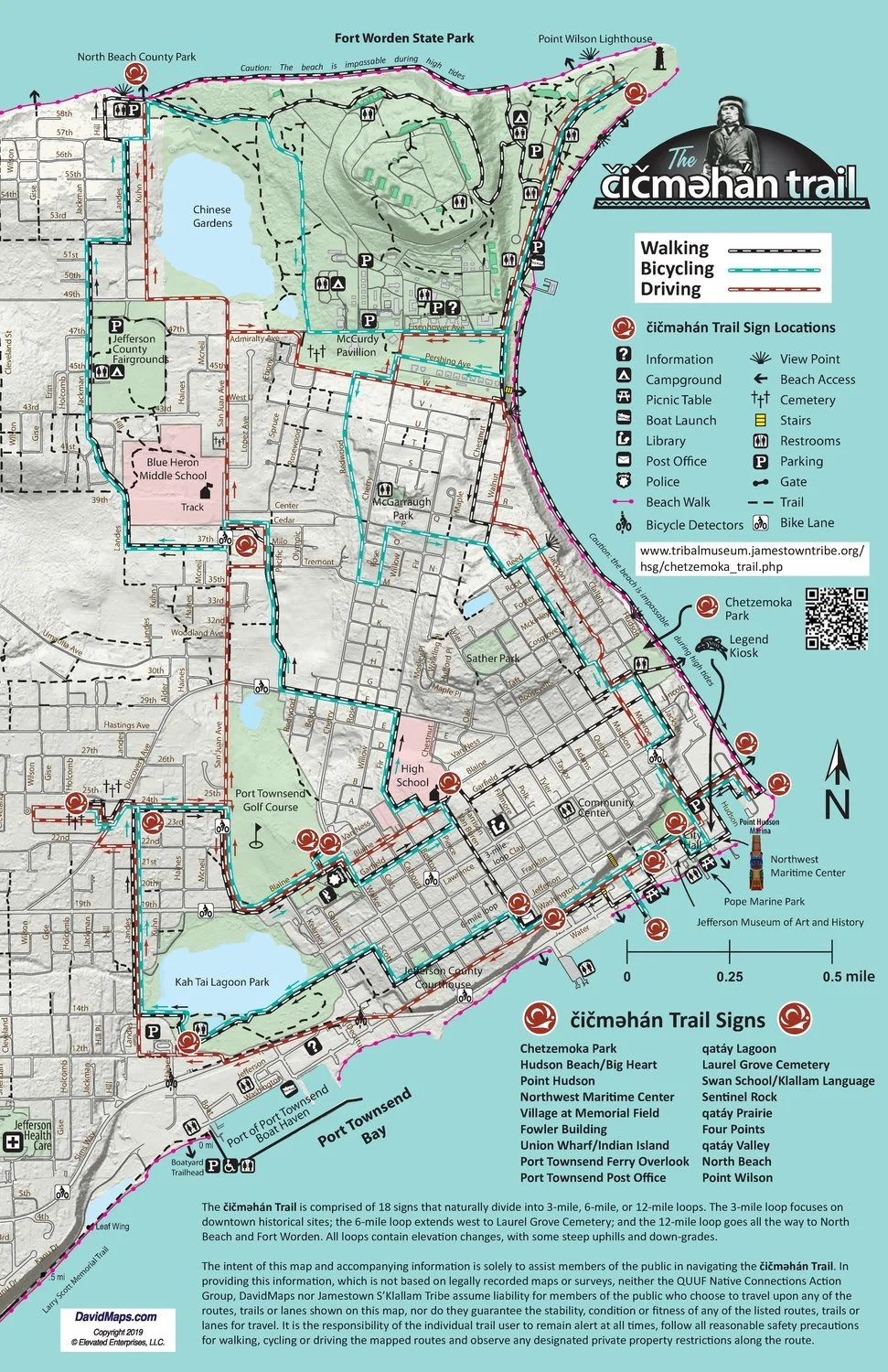
The Chetzemoka Trail is a 3-, 6-, or 12-mile route through Port Townsend that highlights the history of the S’Klallam people and their relationship with 19th-century European settlers. This project, a collaboration between the Jamestown S’Klallam Tribe and the Native Connections Action Group, educates the public on local Indigenous history and culture.
Trail maps are available at Chetzemoka Park and the corner of Water and Monroe, in downtown Port Townsend, across from the Totem.
Volunteer opportunities include trail maintenance, guiding tours, youth involvement, and educational outreach.
We are excited to offer guided tours of the Chetzemoka Trail during the Global Earth Repair Convergence to help participants deepen their understanding of this land and its history.